How Do Search Engines Discover and Rank Websites? موتورهای جستجو چگونه یک وبسایت را پیدا و رتبهبندی میکنند؟
When we search for something on Google or another search engine, thousands or even millions of web pages may be considered before the results are displayed. But how do search engines discover these pages? How do they understand their content, and how do they decide which pages should appear higher in the results?
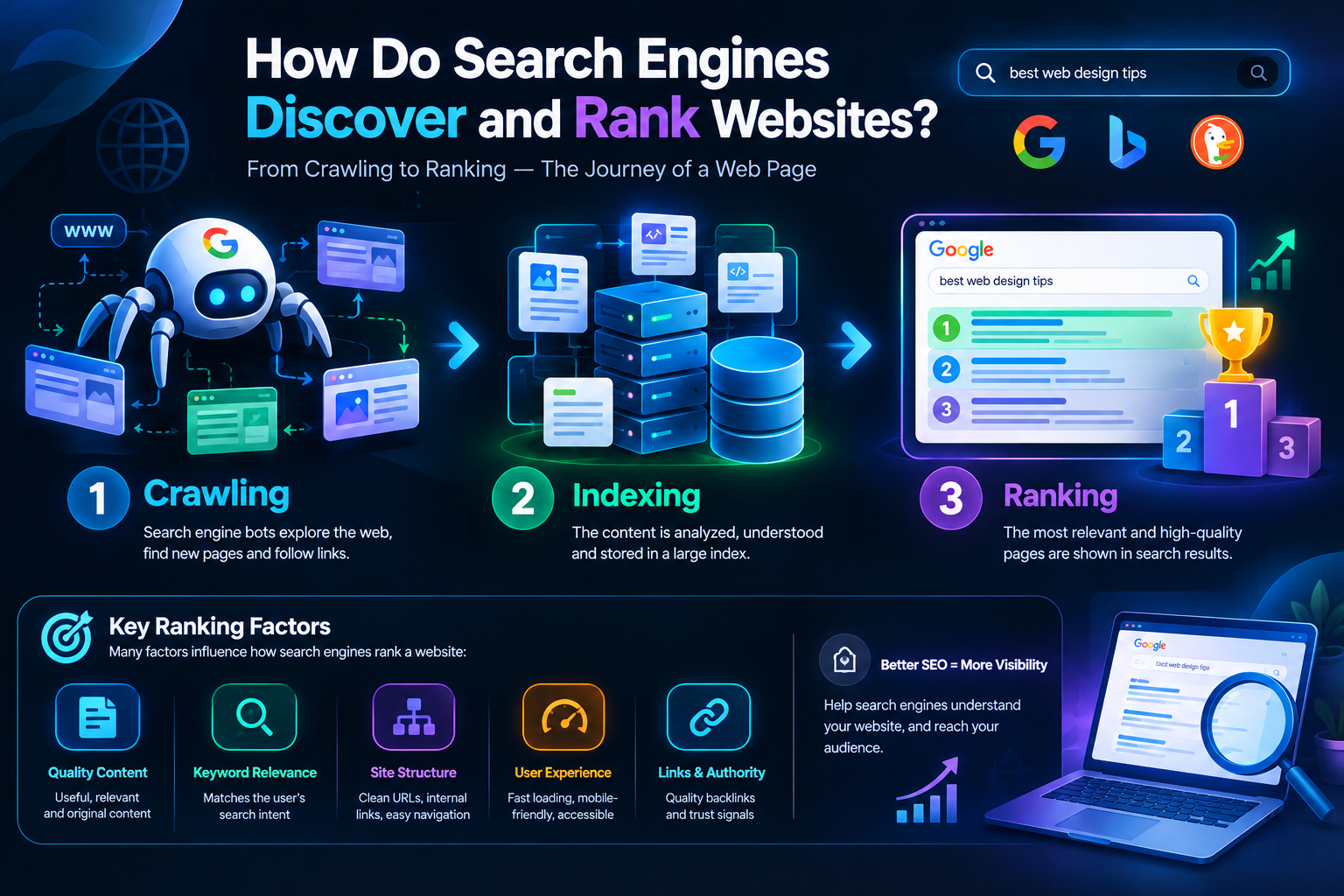
The process can be broadly explained through three main stages: Crawling, Indexing, and Ranking.
🔎 1. What Is Crawling?
The first step is discovering web pages. Search engines use automated programs called Web Crawlers or Bots to explore websites and discover pages.
These crawlers can follow links from one page to another. This allows search engines to discover new URLs and revisit pages that have been updated.
The Role of a Sitemap
An XML Sitemap provides a list of important URLs on a website. It can help search engines understand the site's URL structure and discover pages, although submitting a sitemap does not guarantee that every URL will be indexed.
The Role of Robots.txt
The robots.txt file can provide instructions to crawlers about which areas of a website should not be crawled.
📚 2. What Is Indexing?
After discovering and processing a page, a search engine can analyze and organize information about that page in its index. This process is known as Indexing.
During this process, search engines can analyze the page's content, title, text, images, links, and other available information to better understand what the page is about.
However, discovering a page does not necessarily mean that it will be indexed. A search engine may decide not to include a URL in its index for different reasons.
A Simple Example
Imagine that you publish an article about Responsive Web Design. A search engine processes the page and can identify that the content is related to responsive web design. The information about the page can then be stored in the search system and considered for relevant searches.
🏆 3. How Does Ranking Work?
When someone performs a search, the search engine needs to determine which available results are relevant to that particular query.
Search engines use ranking systems and many different signals to understand relevance and quality. The exact details of their ranking systems are not completely public.
For this reason, there is no single factor that can guarantee the number-one position for a web page.
⚡ What Can Affect a Page's Visibility?
1. Helpful and High-Quality Content
Content should be useful, understandable, and relevant to the user's needs. Creating content only for search engines, without considering the actual audience, is not a good long-term approach.
2. Relevance to the Search Query
Search engines need to understand the relationship between a page and what the user is searching for. Titles, headings, text, and page structure can help communicate the topic of a page.
3. A Clear Website Structure
Logical URLs, useful internal links, and easy access to important pages can help both users and search engines understand how a website is organized.
4. User Experience and Performance
Page performance, mobile compatibility, accessibility, and a good overall experience can all contribute to the quality of a website.
5. Links and Page Authority
Internal links help search engines understand the relationships between pages on a website. Links from other websites can also provide signals about the relevance and authority of a page, although the quality and context of those links matter.
🧩 Crawling vs. Indexing vs. Ranking
🛠️ How Can You Help Search Engines Discover Your Website?
- Create a logical and understandable website structure.
- Use useful internal links for important pages.
- Provide an XML Sitemap.
- Configure the robots.txt file correctly.
- Create useful and relevant content for users.
- Use clear page titles and headings.
- Make the website work well across different devices.
- Improve page speed and overall performance.
- Monitor indexing and search visibility using search engine tools.
❓ Frequently Asked Questions
Does submitting a Sitemap guarantee that pages will be indexed?
No. A Sitemap can help search engines discover and understand a website's URLs, but it does not guarantee that every URL will be indexed.
Can a website guarantee the number-one position on Google?
No. Search rankings depend on many factors and can vary depending on the search query and other circumstances.
How long does it take for a new page to appear in search results?
There is no single timeframe that applies to every page. A search engine first needs to discover and process the page, and it may then decide whether to include it in its index.
Does using more keywords automatically improve rankings?
Simply repeating keywords is not an effective strategy. Content should be written naturally and focus on the user's actual needs.
✅ Conclusion
Getting a website into search engine results is much more than adding a few keywords to a page. First, pages need to be discovered through Crawling, then their information can be processed through Indexing, and finally relevant pages can be ordered through Ranking systems when users perform searches.
For this reason, building a search-friendly website requires attention to content, website structure, internal linking, performance, user experience, and technical SEO.
وقتی عبارتی را در گوگل یا سایر موتورهای جستجو جستجو میکنیم، معمولاً در چند لحظه هزاران یا میلیونها صفحه بررسی و نتایج مرتبط نمایش داده میشوند. اما موتورهای جستجو چگونه این صفحات را پیدا میکنند؟ چگونه محتوای آنها را بررسی میکنند و بر چه اساسی تصمیم میگیرند کدام صفحه در نتایج بالاتر نمایش داده شود؟
فرآیند پیدا کردن و نمایش صفحات وب را میتوان در سه مرحله اصلی خلاصه کرد: خزش (Crawling)، نمایهسازی (Indexing) و رتبهبندی (Ranking).
🔎 ۱. خزش (Crawling) چیست؟
اولین مرحله، پیدا کردن صفحات وب است. موتورهای جستجو از برنامههایی به نام Web Crawler یا Bot استفاده میکنند تا صفحات مختلف اینترنت را بررسی کنند.
این خزندهها از لینکهای موجود در صفحات استفاده میکنند و از یک صفحه به صفحه دیگر میروند. به این ترتیب، صفحات جدید یا صفحاتی که تغییر کردهاند میتوانند شناسایی شوند.
برای مثال، اگر یک سایت جدید ایجاد کرده باشید و صفحهای از آن از طریق یک لینک قابل دسترسی باشد، خزنده موتور جستجو میتواند آن لینک را پیدا کرده و صفحه را بررسی کند.
نقش Sitemap در Crawling
فایل XML Sitemap میتواند فهرستی از URLهای مهم یک وبسایت را در اختیار موتورهای جستجو قرار دهد. Sitemap به موتور جستجو کمک میکند ساختار URLهای سایت را بهتر بشناسد، اما به معنی تضمین ایندکس شدن همه صفحات نیست.
نقش Robots.txt
فایل robots.txt میتواند به خزندهها اعلام کند که کدام بخشهای سایت نباید توسط آنها بررسی شود.
📚 ۲. نمایهسازی (Indexing) چیست؟
بعد از اینکه یک موتور جستجو صفحهای را پیدا و بررسی کرد، اطلاعات آن صفحه میتواند در سیستم ذخیره و سازماندهی شود. این فرآیند را Indexing یا نمایهسازی مینامیم.
در این مرحله، موتور جستجو محتوای صفحه، عنوان، متن، تصاویر، لینکها و اطلاعات مختلف دیگری را بررسی میکند تا موضوع و محتوای صفحه را بهتر درک کند.
البته پیدا شدن یک صفحه به معنی ایندکس شدن قطعی آن نیست. موتور جستجو ممکن است به دلایل مختلفی یک URL را در فهرست نتایج خود قرار ندهد.
مثال ساده
فرض کنیم یک مقاله درباره طراحی وب واکنشگرا نوشتهایم. موتور جستجو صفحه را بررسی میکند و از محتوای آن متوجه میشود که مقاله درباره Responsive Web Design است. سپس اطلاعات صفحه میتواند در سیستم جستجو ذخیره شود تا در جستجوهای مرتبط مورد استفاده قرار گیرد.
🏆 ۳. رتبهبندی (Ranking) چگونه انجام میشود؟
وقتی کاربر عبارتی را جستجو میکند، موتور جستجو باید از میان صفحات مرتبط، نتایجی را نمایش دهد که برای آن جستجو مناسبتر هستند.
این فرآیند با استفاده از سیستمهای رتبهبندی و سیگنالهای مختلف انجام میشود. موتورهای جستجو عوامل متعددی را برای درک ارتباط و کیفیت نتایج در نظر میگیرند و جزئیات دقیق الگوریتمهای آنها نیز بهطور کامل منتشر نمیشود.
به همین دلیل، نمیتوان گفت یک عامل خاص همیشه باعث قرار گرفتن یک صفحه در رتبه اول میشود.
⚡ چه عواملی میتوانند روی دیدهشدن یک صفحه تأثیر بگذارند؟
۱. کیفیت و مفید بودن محتوا
محتوا باید برای کاربر مفید، قابل فهم و مرتبط با موضوع جستجو باشد. تولید محتوای صرفاً برای جذب موتورهای جستجو، بدون توجه به نیاز واقعی کاربر، رویکرد مناسبی نیست.
۲. ارتباط محتوا با عبارت جستجو
موتور جستجو باید بتواند ارتباط میان محتوای صفحه و چیزی که کاربر جستجو کرده است را درک کند. عنوان، متن، تیترها و ساختار صفحه میتوانند در درک موضوع صفحه نقش داشته باشند.
۳. ساختار مناسب سایت
ساختار منطقی URLها، لینکهای داخلی مناسب و دسترسی آسان به صفحات مهم میتواند به کاربران و موتورهای جستجو کمک کند ساختار سایت را بهتر درک کنند.
۴. تجربه کاربری و عملکرد سایت
سرعت بارگذاری، سازگاری با موبایل، دسترسیپذیری و عملکرد مناسب سایت میتوانند در کیفیت تجربه کاربر نقش داشته باشند.
۵. لینکها و اعتبار صفحات
لینکهای داخلی به موتورهای جستجو کمک میکنند ارتباط میان صفحات سایت را بهتر درک کنند. همچنین لینکهایی که از سایتهای دیگر به یک صفحه داده میشوند میتوانند سیگنالهایی درباره اعتبار و ارتباط آن صفحه ایجاد کنند؛ البته کیفیت و زمینه این لینکها اهمیت دارد.
🧩 تفاوت Crawling، Indexing و Ranking
🛠️ چگونه به موتورهای جستجو کمک کنیم سایت ما را بهتر پیدا کنند؟
- ساختار منطقی و قابل فهم برای سایت ایجاد کنید.
- برای صفحات مهم لینک داخلی مناسب ایجاد کنید.
- از Sitemap استفاده کنید.
- فایل robots.txt را به شکل صحیح تنظیم کنید.
- محتوای مفید و مرتبط با نیاز کاربران تولید کنید.
- عنوان و ساختار مناسب برای صفحات ایجاد کنید.
- سایت را برای موبایل و دستگاههای مختلف بهینه کنید.
- سرعت و عملکرد صفحات را بهبود دهید.
- وضعیت ایندکس شدن صفحات را در ابزارهای مربوط به موتور جستجو بررسی کنید.
❓ سوالات متداول
آیا فقط با قرار دادن Sitemap سایت در گوگل، صفحات ایندکس میشوند؟
خیر. Sitemap به کشف و درک URLهای سایت کمک میکند، اما ایندکس شدن یک صفحه را تضمین نمیکند.
آیا رتبه اول گوگل برای همه سایتها تضمینشدنی است؟
خیر. رتبهبندی به عوامل و شرایط مختلفی بستگی دارد و نتایج جستجو میتوانند بر اساس عبارت جستجو، زمان و سایر شرایط تغییر کنند.
چقدر طول میکشد تا یک صفحه در موتور جستجو دیده شود؟
زمان مشخص و یکسانی برای همه صفحات وجود ندارد. موتور جستجو باید ابتدا صفحه را کشف و بررسی کند و سپس در صورت مناسب بودن، آن را در فهرست خود قرار دهد.
آیا استفاده زیاد از کلمات کلیدی باعث رتبه بهتر میشود؟
صرفاً تکرار کردن کلمات کلیدی راهکار مناسبی نیست. بهتر است محتوا به شکل طبیعی و با تمرکز بر نیاز واقعی کاربر نوشته شود.
✅ نتیجهگیری
فرآیند حضور یک وبسایت در نتایج موتورهای جستجو فقط به نوشتن چند کلمه کلیدی محدود نمیشود. ابتدا صفحات باید کشف شوند (Crawling)، سپس اطلاعات آنها نمایهسازی شود (Indexing) و در نهایت، هنگام جستجوی کاربر، صفحات مرتبط بر اساس سیستمهای رتبهبندی مرتب شوند.
بنابراین برای ساخت یک سایت قابل مشاهده در موتورهای جستجو، باید همزمان به محتوا، ساختار سایت، لینکهای داخلی، عملکرد، تجربه کاربر و مسائل فنی SEO توجه کرد.