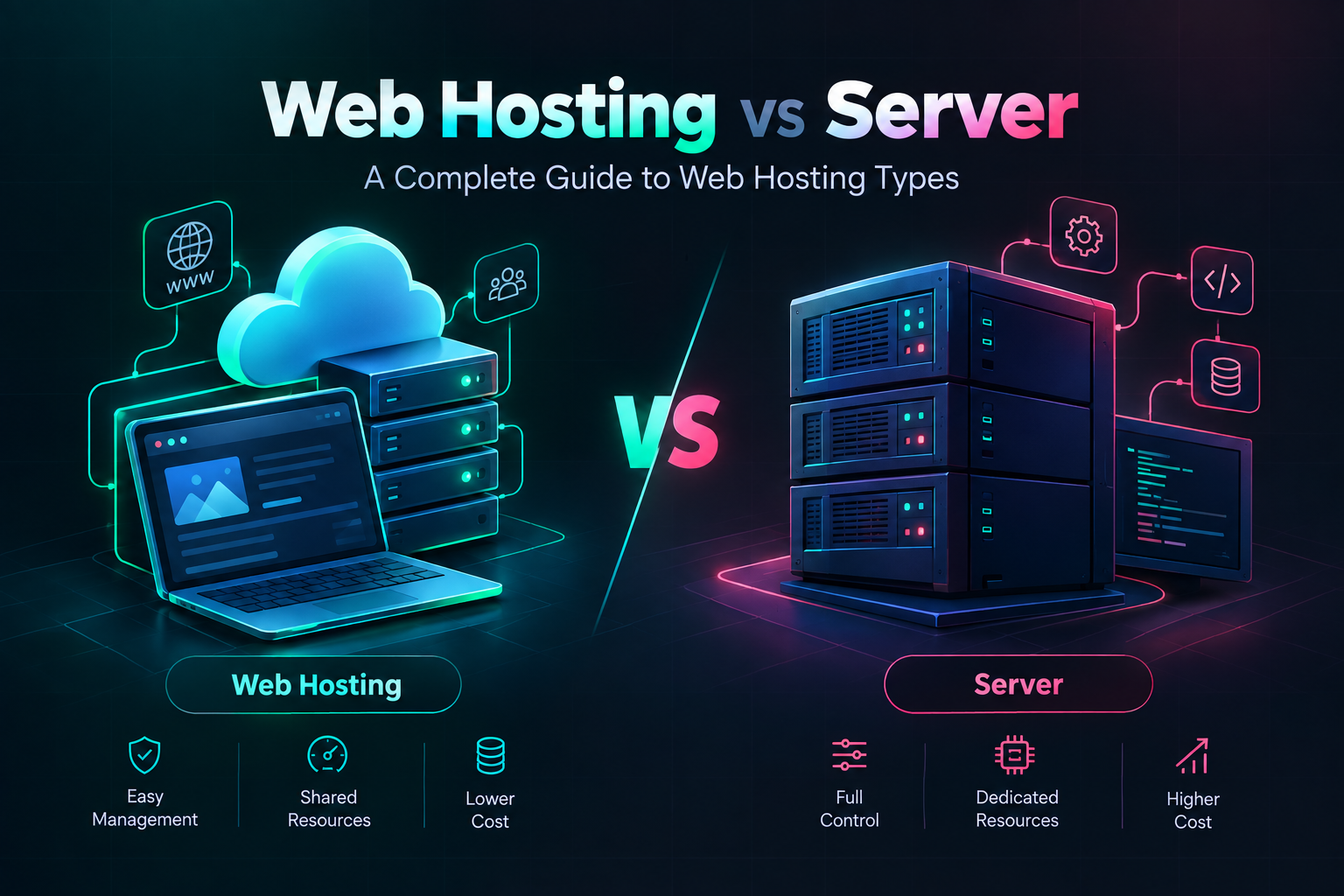
Web Hosting vs Server: A Complete Guide to Web Hosting Types هاست و سرور چه تفاوتی دارند؟ راهنمای کامل انواع میزبانی وب
Web Hosting vs Server: What Is the Difference?
When building a website, we often come across terms such as domain, hosting, and server. Many people think that hosting and servers are the same thing, but they differ in terms of resources, management, control, usage, and cost.
In this article, we will explore what web hosting and servers are, examine their main types, and learn how to choose a suitable option for a website or web application.
What Is Web Hosting?
Web hosting is a service that provides space and resources on a server to store and run a website. HTML, CSS, JavaScript, backend code, images, and other required files can be hosted on a web hosting service.
When a user enters a website address into a browser, the server processes the requested information and sends the required files or response back to the browser.
Many hosting services include a control panel such as cPanel or DirectAdmin. These control panels allow users to manage files, databases, email accounts, domains, and other settings.
Features of Web Hosting
- Simple and fast setup
- Management through a control panel
- Lower cost for many hosting plans
- Suitable for personal and small business websites
- Less infrastructure management in many managed hosting services
What Is a Server?
A server is a computer system or computing infrastructure designed to provide services, run applications, and store or process data for other systems or users.
A server can contain resources such as CPU power, RAM, storage, and network connectivity. Websites, databases, APIs, and other applications can run on a server.
Servers may be physical machines located in data centers or virtual environments provided through cloud infrastructure.
Features of a Server
- Greater control over the system and resources
- Ability to install and run different software
- Control over the operating system and required services
- Suitable for larger or customized applications
- Possible need for server administration and security knowledge
What Is the Difference Between Hosting and a Server?
The main difference is that web hosting is usually a ready-to-use service for hosting websites, while a server can provide a more complete environment with greater control and configurable resources.
With shared hosting, multiple websites use resources from the same server. With a virtual private server or a dedicated server, users generally have more defined resources and greater control over the environment.
Types of Web Hosting
1. Shared Hosting
With shared hosting, multiple websites are hosted on the same server and share its hardware resources.
This type of hosting is usually affordable and suitable for personal websites, blogs, and small projects. However, the performance of a website can sometimes be affected by the resource usage of other websites on the same server.
2. WordPress Hosting
WordPress hosting is designed for websites that use the WordPress content management system. These services may include WordPress-specific configurations, tools, and optimization features.
3. Cloud Hosting
Cloud hosting uses an infrastructure that may include multiple servers or distributed resources. The way resources are allocated and scaled depends on the provider and its architecture.
Types of Servers
1. Virtual Private Server (VPS)
A Virtual Private Server, or VPS, is a virtualized environment running on a physical server. A VPS generally has allocated resources and its own operating system environment.
A VPS can be useful for developers who need more control than shared hosting provides and want to install their own software and services.
2. Dedicated Server
With a dedicated server, an entire physical server is assigned to one customer. This type of server can provide greater resources and control, but it usually involves higher costs and more management responsibilities.
3. Cloud Server
A cloud server is a server environment provided through cloud infrastructure. Features such as scalability, flexibility, and resource allocation depend on the architecture and services of the cloud provider.
What Is the Difference Between a Domain, Hosting, and a Server?
A domain is the human-readable address of a website on the internet. For example:
example.com
Hosting or a server provides the environment where a website can store files and run applications. A domain allows users to access that service through an easy-to-remember name.
DNS settings, such as A records, CNAME records, and nameservers, are commonly used to connect a domain to a hosting service or server.
Which Option Is Suitable for a Website?
The right choice depends on the type of project, expected traffic, budget, required level of control, and technical knowledge.
- Personal website or small project: Shared hosting may be a suitable option.
- Website requiring custom configurations: A VPS can provide more flexibility.
- Complex web application: A VPS, dedicated server, or cloud infrastructure can be considered based on the project's requirements.
- Learning project: Development can begin on a local computer before deploying the application to a hosting service.
There is no single option that is ideal for every project. Before choosing a service, it is important to evaluate its resources, management options, security, support, and cost.
Frequently Asked Questions
Is web hosting the same as a server?
No. Web hosting is usually a hosting service that provides users with part of a server's resources. A server can be a complete infrastructure used to run different services and applications.
Do I need a dedicated server to build a website?
No. Many websites run successfully on shared hosting or a VPS. The need for a dedicated server depends on the project's resources, traffic, architecture, and technical requirements.
Is a VPS better than shared hosting?
A VPS usually provides more control and flexibility, but it can be more complex to manage and may cost more. The appropriate choice depends on the requirements of the project.
Can I run a website without purchasing hosting?
Yes. You can run a website on your personal computer or a local network. However, public and stable access over the internet usually requires an accessible infrastructure such as a hosting service or server.
Conclusion
Web hosting and servers both play important roles in running websites and internet applications, but they differ in terms of control, resources, management, and cost. Shared hosting can be suitable for many simple projects, while VPS and dedicated servers provide more control and customization options.
By understanding the requirements of a project and comparing different services, you can choose an option that matches your website's performance, security, budget, and scalability needs.
هاست و سرور چه تفاوتی دارند؟
وقتی قصد راهاندازی یک وبسایت را داریم، معمولاً با اصطلاحاتی مانند دامنه، هاست و سرور مواجه میشویم. بسیاری از افراد تصور میکنند هاست و سرور یک مفهوم یکسان دارند، اما این دو اصطلاح تفاوتهایی در نحوه استفاده، امکانات، منابع و هزینه دارند.
در این مقاله، با مفهوم هاست و سرور آشنا میشویم، انواع آنها را بررسی میکنیم و یاد میگیریم برای راهاندازی یک وبسایت چه گزینهای مناسبتر است.
هاست چیست؟
هاست (Hosting) فضایی روی یک سرور است که برای ذخیره و اجرای فایلهای وبسایت استفاده میشود. فایلهای HTML، CSS، JavaScript، تصاویر، کدهای بکاند و اطلاعات موردنیاز سایت میتوانند روی هاست قرار بگیرند.
هنگامی که کاربر آدرس وبسایت را در مرورگر وارد میکند، سرور فایلها و اطلاعات موردنیاز را پردازش کرده و به مرورگر کاربر ارسال میکند.
بیشتر سرویسهای هاست همراه با یک پنل مدیریتی مانند cPanel یا DirectAdmin ارائه میشوند. این پنلها به کاربران اجازه میدهند فایلها، پایگاه داده، ایمیلها، دامنهها و تنظیمات مختلف را مدیریت کنند.
ویژگیهای هاست
- راهاندازی ساده و سریع
- امکان مدیریت از طریق پنل کنترل
- هزینه کمتر در بسیاری از سرویسها
- مناسب برای وبسایتهای شخصی و تجاری کوچک
- عدم نیاز به مدیریت کامل زیرساخت سرور در بسیاری از سرویسها
سرور چیست؟
سرور (Server) یک سیستم کامپیوتری یا زیرساخت پردازشی است که برای ارائه خدمات، اجرای برنامهها و ذخیره اطلاعات به کاربران یا سیستمهای دیگر استفاده میشود.
یک سرور میتواند منابعی مانند پردازنده، حافظه RAM، فضای ذخیرهسازی و اتصال شبکه داشته باشد. وبسایتها، برنامههای کاربردی، پایگاههای داده و سرویسهای مختلف میتوانند روی سرور اجرا شوند.
سرورها ممکن است بهصورت فیزیکی در مراکز داده قرار داشته باشند یا به شکل سرورهای مجازی در زیرساختهای ابری ارائه شوند.
ویژگیهای سرور
- امکان کنترل بیشتر روی سیستم و منابع
- قابلیت نصب و اجرای نرمافزارهای مختلف
- امکان تنظیم سیستمعامل و سرویسهای موردنیاز
- مناسب برای پروژههای بزرگتر و برنامههای اختصاصی
- نیاز احتمالی به دانش مدیریت سرور و امنیت
تفاوت هاست و سرور در چیست؟
تفاوت اصلی این است که هاست معمولاً یک سرویس آماده برای میزبانی وبسایت است، درحالیکه سرور میتواند یک محیط کاملتر با منابع و کنترل بیشتر در اختیار کاربر قرار دهد.
در هاست اشتراکی، چند وبسایت از منابع یک سرور استفاده میکنند. اما در سرور مجازی یا اختصاصی، کاربر معمولاً کنترل و منابع مشخصتری در اختیار دارد.
انواع هاست
۱. هاست اشتراکی (Shared Hosting)
در هاست اشتراکی، چندین وبسایت روی یک سرور قرار میگیرند و منابع سختافزاری سرور را بهصورت مشترک استفاده میکنند.
این نوع هاست معمولاً هزینه مناسبی دارد و برای وبسایتهای شخصی، وبلاگها و پروژههای کوچک گزینهای ساده محسوب میشود. بااینحال، عملکرد سایت میتواند تحت تأثیر مصرف منابع وبسایتهای دیگر قرار بگیرد.
۲. هاست وردپرس (WordPress Hosting)
هاست وردپرس برای اجرای وبسایتهایی طراحی شده است که از سیستم مدیریت محتوای WordPress استفاده میکنند. این سرویسها ممکن است تنظیمات و ابزارهای مخصوص وردپرس داشته باشند.
۳. هاست ابری (Cloud Hosting)
هاست ابری از زیرساختی متشکل از چندین سرور یا منابع توزیعشده استفاده میکند. نحوه ارائه منابع و قابلیت افزایش مقیاس در این نوع سرویس به شرکت ارائهدهنده بستگی دارد.
انواع سرور
۱. سرور مجازی (VPS)
سرور مجازی یا VPS یک محیط مجازیشده است که روی یک سرور فیزیکی اجرا میشود. هر VPS معمولاً منابع اختصاصیافته و سیستمعامل مستقل خود را دارد.
VPS برای توسعهدهندگانی مناسب است که به کنترل بیشتری نسبت به هاست اشتراکی نیاز دارند و میخواهند نرمافزارها و سرویسهای دلخواه خود را نصب کنند.
۲. سرور اختصاصی (Dedicated Server)
در سرور اختصاصی، یک سرور فیزیکی بهطور کامل در اختیار یک مشتری قرار میگیرد. این نوع سرور میتواند منابع و کنترل بیشتری ارائه دهد، اما معمولاً هزینه و مسئولیت مدیریتی بالاتری دارد.
۳. سرور ابری (Cloud Server)
سرور ابری یک محیط سروری است که روی زیرساخت ابری ارائه میشود. ویژگیهایی مانند مقیاسپذیری، انعطافپذیری و نحوه تخصیص منابع به معماری و خدمات شرکت ارائهدهنده بستگی دارد.
دامنه چه تفاوتی با هاست و سرور دارد؟
دامنه (Domain) آدرس قابلخواندن وبسایت در اینترنت است؛ برای مثال:
example.com
هاست یا سرور محلی برای ذخیره و اجرای وبسایت فراهم میکند، درحالیکه دامنه به کاربران کمک میکند از طریق یک نام ساده به آن سرویس دسترسی پیدا کنند.
برای اتصال دامنه به سرور معمولاً از تنظیمات DNS مانند رکوردهای A و CNAME یا Nameserverها استفاده میشود.
برای یک وبسایت کدام گزینه مناسب است؟
انتخاب هاست یا سرور به نوع پروژه، میزان ترافیک، بودجه، سطح کنترل موردنیاز و دانش فنی بستگی دارد.
- وبسایت شخصی یا پروژه کوچک: هاست اشتراکی میتواند گزینه مناسبی باشد.
- وبسایت با نیاز به تنظیمات اختصاصی: VPS میتواند انعطاف بیشتری ارائه دهد.
- برنامه کاربردی پیچیده: سرور مجازی، اختصاصی یا زیرساخت ابری با توجه به نیاز پروژه بررسی میشود.
- پروژه آموزشی: میتوان توسعه را ابتدا روی سیستم شخصی انجام داد و سپس آن را روی سرویس میزبانی مستقر کرد.
هیچ گزینهای برای همه پروژهها بهترین نیست. بهتر است پیش از انتخاب، منابع موردنیاز، روش مدیریت، امنیت، پشتیبانی و هزینه سرویس را بررسی کنید.
سؤالات متداول
آیا هاست همان سرور است؟
خیر. هاست معمولاً یک سرویس میزبانی است که بخشی از منابع سرور را در اختیار کاربر قرار میدهد. سرور میتواند زیرساخت کاملتری باشد که سرویسهای مختلف روی آن اجرا میشوند.
آیا برای ساخت یک وبسایت حتماً به سرور اختصاصی نیاز داریم؟
خیر. بسیاری از وبسایتها با هاست اشتراکی یا VPS اجرا میشوند. نیاز به سرور اختصاصی به منابع، ترافیک، معماری و الزامات پروژه بستگی دارد.
آیا VPS از هاست اشتراکی بهتر است؟
VPS معمولاً کنترل و انعطاف بیشتری ارائه میدهد، اما مدیریت آن ممکن است پیچیدهتر باشد و هزینه بالاتری داشته باشد. انتخاب مناسب به نیاز پروژه بستگی دارد.
آیا میتوان بدون خرید هاست، وبسایت را اجرا کرد؟
بله. میتوان وبسایت را روی سیستم شخصی یا شبکه محلی اجرا کرد؛ اما برای دسترسی عمومی و پایدار در اینترنت، معمولاً به یک زیرساخت قابلدسترسی مانند سرویس میزبانی یا سرور نیاز است.
نتیجهگیری
هاست و سرور هر دو در اجرای وبسایتها و برنامههای اینترنتی نقش دارند، اما میزان کنترل، منابع، مدیریت و هزینه آنها متفاوت است. هاست اشتراکی برای بسیاری از پروژههای ساده مناسب است، درحالیکه VPS و سرورهای اختصاصی امکان کنترل و شخصیسازی بیشتری فراهم میکنند.
با شناخت نیازهای پروژه و مقایسه سرویسهای مختلف، میتوان گزینهای را انتخاب کرد که از نظر عملکرد، امنیت، هزینه و قابلیت توسعه با اهداف وبسایت هماهنگ باشد.