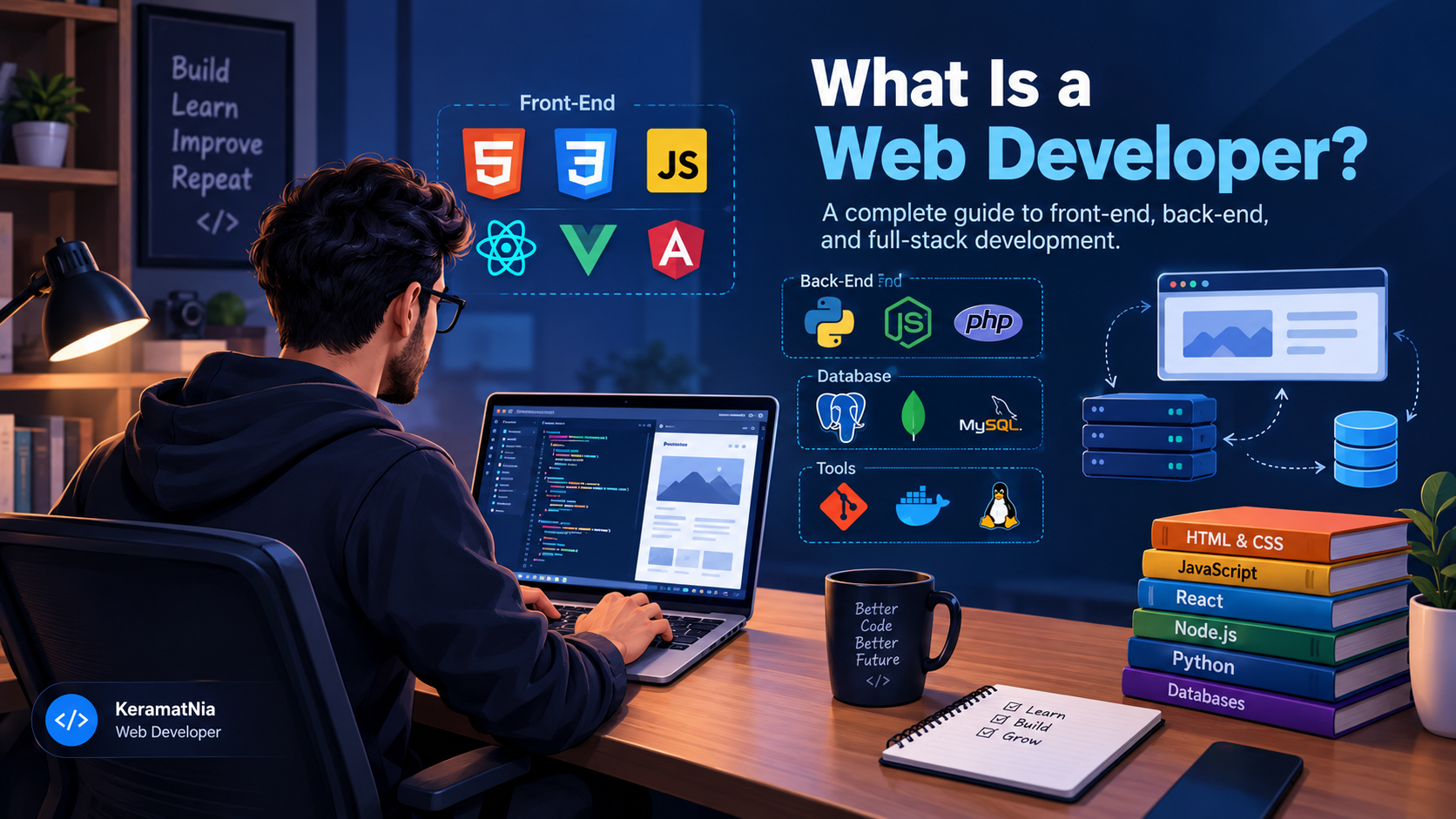
What Is a Web Developer? A Complete Guide to Front-End, Back-End, and Full-Stack Development توسعهدهنده وب چیست؟ راهنمای کامل فرانتاند، بکاند و فولاستک
What Is a Web Developer?
A web developer is a professional who designs, builds, and maintains websites and web applications using programming languages, development tools, and modern technologies. Web development combines technical knowledge, problem-solving, creativity, and user experience to create reliable and functional digital products.
Web developers play an important role in the digital world. From personal websites and online stores to complex platforms and web applications, developers are responsible for turning ideas into interactive and useful online experiences.
Types of Web Developers
1. Front-End Developer
A front-end developer focuses on the visible part of a website or web application. This is the part users interact with directly through their browsers.
Front-end developers create layouts, navigation menus, buttons, forms, animations, and responsive interfaces that work across different screen sizes and devices.
Important Front-End Technologies
- HTML: Defines the structure and content of a webpage.
- CSS: Controls the appearance, layout, colors, and styling.
- JavaScript: Adds interactivity and dynamic functionality.
- React, Vue, and Angular: Frameworks and libraries for building modern user interfaces.
2. Back-End Developer
A back-end developer works on the server-side part of a website or application. The back end is responsible for processing requests, managing data, handling authentication, and communicating with databases.
Although users cannot directly see most back-end operations, these operations are essential for the functionality, security, and performance of a web application.
Important Back-End Responsibilities
- Processing requests from the front end
- Creating and managing APIs
- Connecting applications to databases
- Implementing authentication and authorization
- Validating and protecting user data
- Improving application performance and security
Popular Back-End Technologies
- Python: Django, Flask, and FastAPI
- JavaScript: Node.js and Express.js
- PHP: Laravel and other PHP frameworks
- Java: Spring Boot
- C#: ASP.NET Core
3. Full-Stack Developer
A full-stack developer works with both the front-end and back-end parts of a web application. This type of developer understands how the user interface, server, database, and application logic work together.
Full-stack development requires knowledge of several technologies and development concepts. A full-stack developer does not necessarily need to master every technology, but should understand how to design, build, test, and maintain complete web applications.
The Role of Databases in Web Development
Databases are an important part of most modern websites and applications. They are used to store, organize, update, and retrieve information such as user accounts, products, articles, orders, and reservations.
Popular Database Technologies
- PostgreSQL: A powerful relational database system.
- MySQL: A widely used relational database system.
- SQLite: A lightweight database suitable for smaller applications and prototypes.
- MongoDB: A document-oriented NoSQL database.
Developers should understand important database concepts such as tables, relationships, primary keys, foreign keys, queries, indexes, and data security. Learning SQL is especially useful when working with relational databases.
How a Web Application Works
A web application usually contains several connected components. The user interacts with the front end, the front end sends requests to the back end, and the back end processes the request and communicates with the database when necessary.
- The user interacts with the website.
- The browser sends a request to the server.
- The back end processes the request.
- The application reads or updates information in the database.
- The server sends a response to the browser.
- The front end displays the result to the user.
How to Become a Web Developer
Becoming a web developer requires consistent practice, problem-solving, and a clear learning path. Learning every programming language at the same time is not necessary. It is more effective to understand the fundamentals and gradually build real projects.
Step 1: Learn HTML and CSS
Start by learning HTML and CSS. These technologies help you understand the structure and visual design of websites. Practice by creating landing pages, personal portfolios, and responsive layouts.
Step 2: Learn JavaScript
JavaScript allows you to create interactive websites. Learn variables, conditions, loops, functions, arrays, objects, events, the DOM, asynchronous programming, and working with APIs.
Step 3: Learn a Back-End Language
After learning the basics of front-end development, choose a back-end language such as Python, JavaScript, PHP, Java, or C#. Focus on one language first and learn how to create server-side applications.
Step 4: Learn Databases
Learn how to store and retrieve information using a database. Start with SQL concepts and practice creating tables, inserting data, updating records, deleting records, and writing queries.
Step 5: Build Real Projects
Practical projects help you turn theoretical knowledge into useful skills. Instead of only watching tutorials, try to build projects independently and solve problems as they appear.
Some useful project ideas include:
- Personal portfolio website
- Blogging platform
- Task management application
- Online booking system
- Authentication and registration system
- Admin dashboard
- REST API
Essential Tools for Web Developers
- Visual Studio Code: A popular code editor.
- Git: A version control system for tracking code changes.
- GitHub: A platform for hosting and managing code repositories.
- Chrome DevTools: Browser tools for debugging and inspecting websites.
- Docker: A tool for packaging and running applications in containers.
- Linux: An operating system widely used in development and server environments.
Important Skills for Web Developers
Technical knowledge is only one part of becoming a successful developer. Developers should also improve their ability to analyze problems, read documentation, communicate with others, and manage their time.
- Problem-solving and logical thinking
- Understanding programming fundamentals
- Debugging and testing
- Reading technical documentation
- Writing clean and maintainable code
- Understanding web security
- Learning continuously
- Working with other developers and teams
Career Opportunities in Web Development
Web development offers different career opportunities. Developers can work as front-end developers, back-end developers, full-stack developers, software engineers, freelance developers, or technical entrepreneurs.
Some developers work for technology companies, while others build their own products, provide freelance services, or create startups. The best career path depends on a person's interests, skills, experience, and long-term goals.
Frequently Asked Questions
Is web development difficult to learn?
Web development can be challenging, especially at the beginning. However, learning step by step, practicing regularly, and building real projects can make the learning process easier and more effective.
Should I learn front-end or back-end development first?
Learning HTML, CSS, and basic JavaScript is a useful starting point because these technologies help you understand how websites work. After learning the fundamentals, you can explore back-end development.
Do I need to learn multiple programming languages?
You do not need to learn many programming languages at the beginning. Focus on one language, understand its fundamentals, and use it to build projects. You can learn additional languages when your goals require them.
Conclusion
Web development is a combination of programming, creativity, problem-solving, and continuous learning. Whether you choose front-end, back-end, or full-stack development, understanding the fundamentals and building practical projects are essential steps toward improvement.
Start with a clear learning path, practice consistently, and gradually develop more complex projects. With time and dedication, you can turn your programming knowledge into professional websites, useful applications, and even your own digital products.
© Just Programmer | Learn • Build • Grow
توسعهدهنده وب چیست؟
توسعهدهنده وب فردی متخصص است که با استفاده از زبانهای برنامهنویسی، ابزارهای توسعه و فناوریهای مدرن، وبسایتها و اپلیکیشنهای تحت وب را طراحی، پیادهسازی و نگهداری میکند. توسعه وب ترکیبی از دانش فنی، حل مسئله، خلاقیت و توجه به تجربه کاربری است.
توسعهدهندگان وب نقش مهمی در دنیای دیجیتال دارند. از وبسایتهای شخصی و فروشگاههای اینترنتی گرفته تا پلتفرمهای بزرگ و اپلیکیشنهای پیچیده، توسعهدهندگان ایدهها را به محصولات دیجیتال کاربردی و تعاملی تبدیل میکنند.
انواع توسعهدهندگان وب
۱. توسعهدهنده فرانتاند (Front-End Developer)
توسعهدهنده فرانتاند روی بخش قابل مشاهده وبسایت یا اپلیکیشن کار میکند. این بخش همان قسمتی است که کاربران مستقیماً از طریق مرورگر با آن تعامل دارند.
طراحی ظاهر صفحات، منوهای ناوبری، دکمهها، فرمها، انیمیشنها و ایجاد رابطهای کاربری واکنشگرا از وظایف مهم توسعهدهنده فرانتاند هستند. یک رابط کاربری مناسب باید در اندازههای مختلف صفحهنمایش و دستگاههای گوناگون بهدرستی نمایش داده شود.
فناوریهای مهم فرانتاند
- HTML: برای ایجاد ساختار و محتوای صفحات وب استفاده میشود.
- CSS: ظاهر، رنگها، فاصلهها، چیدمان و طراحی صفحات را کنترل میکند.
- JavaScript: قابلیتهای تعاملی و عملکردهای پویا را به سایت اضافه میکند.
- React، Vue و Angular: کتابخانهها و فریمورکهایی برای ساخت رابطهای کاربری مدرن هستند.
۲. توسعهدهنده بکاند (Back-End Developer)
توسعهدهنده بکاند روی بخش سمت سرور یک وبسایت یا اپلیکیشن کار میکند. بکاند وظیفه پردازش درخواستها، مدیریت اطلاعات، احراز هویت کاربران و ارتباط با پایگاه داده را بر عهده دارد.
اگرچه کاربران معمولاً بیشتر عملیات بکاند را بهصورت مستقیم مشاهده نمیکنند، اما این بخش برای عملکرد صحیح، امنیت و سرعت یک اپلیکیشن وب ضروری است.
وظایف مهم توسعهدهنده بکاند
- پردازش درخواستهای ارسالشده از فرانتاند
- طراحی و ایجاد APIها
- اتصال اپلیکیشن به پایگاه داده
- پیادهسازی احراز هویت و سطح دسترسی کاربران
- اعتبارسنجی و محافظت از اطلاعات کاربران
- افزایش امنیت و بهبود عملکرد برنامه
فناوریهای محبوب بکاند
- Python: فریمورکهای Django، Flask و FastAPI
- JavaScript: محیط Node.js و فریمورک Express.js
- PHP: فریمورک Laravel و سایر ابزارهای PHP
- Java: فریمورک Spring Boot
- C#: پلتفرم ASP.NET Core
۳. توسعهدهنده فولاستک (Full-Stack Developer)
توسعهدهنده فولاستک با هر دو بخش فرانتاند و بکاند یک اپلیکیشن وب کار میکند. این نوع توسعهدهنده درک مناسبی از نحوه ارتباط رابط کاربری، سرور، پایگاه داده و منطق برنامه دارد.
توسعه فولاستک به آشنایی با فناوریها و مفاهیم مختلف نیاز دارد. یک توسعهدهنده فولاستک لزوماً نباید در تمام فناوریها متخصص باشد، اما باید بتواند ساختار یک اپلیکیشن کامل را طراحی، پیادهسازی، آزمایش و نگهداری کند.
نقش پایگاه داده در توسعه وب
پایگاههای داده یکی از بخشهای مهم بیشتر وبسایتها و اپلیکیشنهای مدرن هستند. از پایگاه داده برای ذخیره، سازماندهی، بهروزرسانی و بازیابی اطلاعاتی مانند حسابهای کاربری، محصولات، مقالات، سفارشها و رزروها استفاده میشود.
فناوریهای محبوب پایگاه داده
- PostgreSQL: یک سیستم مدیریت پایگاه داده رابطهای قدرتمند است.
- MySQL: یکی از سیستمهای پرکاربرد پایگاه داده رابطهای است.
- SQLite: پایگاه دادهای سبک که برای پروژههای کوچکتر و نمونههای اولیه مناسب است.
- MongoDB: یک پایگاه داده NoSQL مبتنی بر اسناد است.
توسعهدهندگان باید مفاهیم مهمی مانند جدولها، ارتباط بین دادهها، کلید اصلی، کلید خارجی، کوئریها، ایندکسها و امنیت اطلاعات را یاد بگیرند. یادگیری SQL نیز هنگام کار با پایگاههای داده رابطهای اهمیت زیادی دارد.
نحوه کار یک اپلیکیشن وب
یک اپلیکیشن وب معمولاً از چند بخش مرتبط با یکدیگر تشکیل میشود. کاربر با فرانتاند تعامل دارد، فرانتاند درخواست را به بکاند ارسال میکند و بکاند پس از پردازش درخواست، در صورت نیاز با پایگاه داده ارتباط برقرار میکند.
- کاربر با وبسایت تعامل میکند.
- مرورگر یک درخواست به سرور ارسال میکند.
- بکاند درخواست را پردازش میکند.
- برنامه اطلاعات موردنیاز را از پایگاه داده دریافت یا در آن ذخیره میکند.
- سرور پاسخ را به مرورگر ارسال میکند.
- فرانتاند نتیجه را به کاربر نمایش میدهد.
چگونه به یک توسعهدهنده وب تبدیل شویم؟
تبدیل شدن به یک توسعهدهنده وب به تمرین مستمر، توانایی حل مسئله و داشتن یک مسیر یادگیری مشخص نیاز دارد. لازم نیست از ابتدا تمام زبانهای برنامهنویسی را بهصورت همزمان یاد بگیرید. بهتر است ابتدا مفاهیم پایه را بهخوبی یاد بگیرید و سپس بهمرور پروژههای واقعی بسازید.
مرحله اول: یادگیری HTML و CSS
یادگیری را با HTML و CSS شروع کنید. این دو فناوری به شما کمک میکنند ساختار و ظاهر صفحات وب را درک کنید. برای تمرین میتوانید صفحات معرفی، وبسایت شخصی و رابطهای کاربری واکنشگرا طراحی کنید.
مرحله دوم: یادگیری JavaScript
JavaScript برای ساخت وبسایتهای تعاملی استفاده میشود. مفاهیمی مانند متغیرها، شرطها، حلقهها، توابع، آرایهها، اشیا، رویدادها، DOM، برنامهنویسی غیرهمزمان و کار با APIها را یاد بگیرید.
مرحله سوم: یادگیری یک زبان بکاند
پس از یادگیری مفاهیم پایه فرانتاند، یک زبان بکاند مانند Python، JavaScript، PHP، Java یا C# را انتخاب کنید. بهتر است در ابتدا روی یک زبان تمرکز کنید و نحوه ساخت برنامههای سمت سرور را یاد بگیرید.
مرحله چهارم: یادگیری پایگاه داده
یاد بگیرید چگونه اطلاعات را در پایگاه داده ذخیره و بازیابی کنید. یادگیری مفاهیم SQL را شروع کنید و ایجاد جدول، وارد کردن داده، بهروزرسانی رکوردها، حذف اطلاعات و نوشتن کوئریها را تمرین کنید.
مرحله پنجم: ساخت پروژههای واقعی
پروژههای عملی به شما کمک میکنند دانش تئوری را به مهارت واقعی تبدیل کنید. بهجای اینکه فقط آموزش تماشا کنید، سعی کنید پروژهها را بهصورت مستقل بسازید و مشکلاتی را که در مسیر ایجاد میشوند، حل کنید.
چند ایده مناسب برای پروژه عبارتاند از:
- وبسایت شخصی و رزومه آنلاین
- سیستم مدیریت مقالات
- اپلیکیشن مدیریت وظایف
- سیستم رزرو آنلاین
- سیستم ثبتنام و ورود کاربران
- پنل مدیریت حرفهای
- ساخت REST API
ابزارهای ضروری برای توسعهدهندگان وب
- Visual Studio Code: یک ویرایشگر کد محبوب برای توسعه نرمافزار است.
- Git: سیستمی برای مدیریت نسخهها و ثبت تغییرات کد است.
- GitHub: پلتفرمی برای ذخیره و مدیریت مخازن کد است.
- Chrome DevTools: مجموعه ابزارهای مرورگر برای بررسی و رفع خطاهای وبسایت است.
- Docker: ابزاری برای بستهبندی و اجرای برنامهها در محیط کانتینری است.
- Linux: سیستمعاملی پرکاربرد در محیطهای توسعه و سرورها است.
مهارتهای مهم برای توسعهدهندگان وب
دانش فنی تنها یکی از بخشهای مهم موفقیت در توسعه وب است. توسعهدهندگان باید توانایی تحلیل مسئله، مطالعه مستندات، برقراری ارتباط و مدیریت زمان خود را نیز تقویت کنند.
- حل مسئله و تفکر منطقی
- درک مفاهیم پایه برنامهنویسی
- رفع خطا و آزمایش کد
- مطالعه مستندات فنی
- نوشتن کد تمیز و قابل نگهداری
- آشنایی با امنیت وب
- یادگیری مستمر
- توانایی همکاری با توسعهدهندگان و تیمها
فرصتهای شغلی در توسعه وب
توسعه وب فرصتهای شغلی مختلفی در اختیار افراد قرار میدهد. توسعهدهندگان میتوانند بهعنوان توسعهدهنده فرانتاند، بکاند، فولاستک، مهندس نرمافزار، توسعهدهنده فریلنسر یا کارآفرین حوزه فناوری فعالیت کنند.
برخی از توسعهدهندگان در شرکتهای فناوری کار میکنند و برخی دیگر خدمات فریلنسری ارائه میدهند، محصولات دیجیتال خود را میسازند یا کسبوکار اینترنتی راهاندازی میکنند. انتخاب مسیر شغلی به علاقه، مهارت، تجربه و اهداف بلندمدت هر فرد بستگی دارد.
سؤالات متداول
آیا یادگیری توسعه وب سخت است؟
یادگیری توسعه وب، بهخصوص در ابتدای مسیر، ممکن است چالشبرانگیز باشد. بااینحال، یادگیری مرحلهبهمرحله، تمرین منظم و ساخت پروژههای واقعی میتواند این مسیر را سادهتر و مؤثرتر کند.
ابتدا فرانتاند را یاد بگیریم یا بکاند را؟
یادگیری HTML، CSS و مبانی JavaScript شروع مناسبی است؛ زیرا به شما کمک میکند نحوه کار وبسایتها را بهتر درک کنید. پس از یادگیری مفاهیم پایه، میتوانید وارد حوزه بکاند شوید.
آیا باید چند زبان برنامهنویسی یاد بگیریم؟
در ابتدای مسیر نیازی به یادگیری زبانهای برنامهنویسی متعدد ندارید. ابتدا روی یک زبان تمرکز کنید، مفاهیم آن را بهخوبی یاد بگیرید و با آن پروژه بسازید. پس از پیشرفت، میتوانید زبانهای دیگر را متناسب با اهداف خود یاد بگیرید.
نتیجهگیری
توسعه وب ترکیبی از برنامهنویسی، خلاقیت، حل مسئله و یادگیری مداوم است. چه مسیر فرانتاند را انتخاب کنید، چه بکاند یا فولاستک، یادگیری مفاهیم پایه و ساخت پروژههای عملی از مهمترین مراحل پیشرفت شما خواهند بود.
مسیر یادگیری مشخصی انتخاب کنید، بهصورت مستمر تمرین کنید و بهمرور پروژههای پیچیدهتری بسازید. با گذشت زمان و تلاش، میتوانید دانش برنامهنویسی خود را به وبسایتهای حرفهای، اپلیکیشنهای کاربردی و حتی محصولات دیجیتال شخصی تبدیل کنید.
© Just Programmer | Learn • Build • Grow